
Security teams don’t need more findings. They need a better context.
ITWeb Security Summit South Africa, one theme dominated every conversation with CISOs, enterprise teams, telecom providers, and public sector leaders: prioritisation is broken and visibility is why.
Two days. Dozens of conversations. Security leaders from enterprises, telecommunications providers, and public sector organisations. The message was consistent: the industry has a prioritisation problem, and it runs deeper than tooling.
Limited visibility across organisational attack surfaces, shadow IT, unknown assets, and an overwhelming volume of vulnerability findings continue to hamper security teams. When every scanner returns thousands of findings and no two vendors agree on what “critical” means, the question of where to focus first becomes genuinely difficult to answer.
“The cybersecurity challenge is no longer finding vulnerabilities it’s understanding which exposures actually matter.”
This is precisely where the industry conversation is shifting: from vulnerability management toward exposure management, where context, exploitability, and business risk take precedence over raw finding counts.
Themes from the summit floor
Most security teams continue to struggle with limited visibility across their attack surface shadow IT; unknown assets, and high volumes of false-positive findings remain persistent in pain points.
Teams are overwhelmed by thousands of vulnerabilities and exposures, often lacking the context required to effectively prioritise remediation efforts.
Risk scoring methodologies vary significantly between vendors, creating ongoing debate around what truly constitutes “critical” risk and who gets to define it.
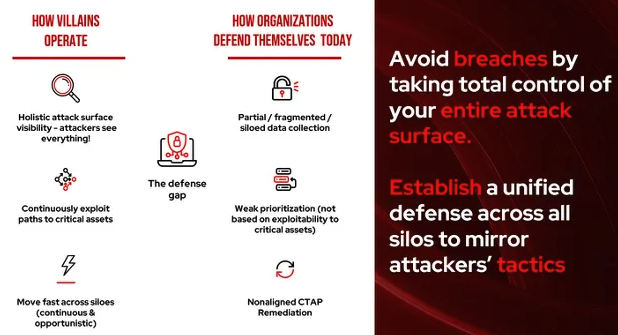
The quality of prioritisation is directly tied to visibility. Organisations that can correlate data across a broader attack surface are better positioned to understand risk in proper business and technical context.
The South African cybersecurity community’s growing engagement with CTEM frameworks was encouraging to see firsthand.
The shift to exposure management
This is where RedRok’s approach to Continuous Threat Exposure Management (CTEM) addresses this directly helping organisations move beyond vulnerability lists and focus on validated, contextualised risk across the full attack surface.
Written by Idan Baranes from RedRok. Article originally published here.
Contact info@solid8.co.za for a demo or to learn more about RedRok.